


Friday, August 22, 2014
Friday, August 15, 2014
Good article from NY Times
14 Screenwriters Writing
By ADAM STERNBERGH
Published: November 25, 2013 23 Comments
Screenwriters famously get no respect. It probably doesn’t help that one of the most famous quotes about the trade boils down to money, competition and idiots. Herman J. Mankiewicz, in an often-cited telegram sent from Hollywood to his fellow writer Ben Hecht, promised: “Millions are to be grabbed out here, and your only competition is idiots. Don’t let this get around.”


Janusz Kaminski for The New York Times
Making a Scene
A video gallery of one-line films starring the actors who gave the year’s best performances.
Readers’ Comments
Readers shared their thoughts on this article.
So in the starry constellation of literary pursuits, screenwriters have always existed, reputationally if not financially, somewhere due south of novelists and maybe southeast of poets and playwrights. With their riches and big-screen credits, people who wrote for the movies used to be able to at least lord over lowly TV writers, but even that dynamic has reversed in recent years. TV writers are now routinely lauded as auteurs. Screenwriters are still screenwriters, i.e., the people who write the scripts that the directors and actors will eventually rewrite, mangle or ignore.
But, oh, what scripts: 2013 was an excellent year for the written word as spoken on-screen. “Before Midnight,” written by its stars (Ethan Hawke and Julie Delpy) and its director (Richard Linklater), is basically the third installment in a captivating conversation that has been going on for 18 years. At the other end of the loquaciousness spectrum, there’s “All Is Lost,” written by J. C. Chandor, a screenplay that includes fewer lines of dialogue than there are sentences in this introduction. Sarah Polley brought her storytelling powers to bear on a quasi documentary, “Stories We Tell,” while Nicole Holofcener, with “Enough Said,” continued her streak as the patron saint of literate neurotics (both on-screen and off). Greta Gerwig (along with the director Noah Baumbach) wrote lines, then gave them voice, as the title character in “Frances Ha.” Andrew Bujalski somehow made a computer chess tournament exciting. Spike Jonze wrote a classic love story, a tale of boy meets operating system.
It’s notable that many of these writers — most, in fact — also directed their own scripts (Bell, Bujalski, Chandor, Holofcener, Jonze, Linklater, Polley), and several also star in the films they wrote (Bell, Delpy, Gerwig, Hawke, Seth Rogen). Here, though, we simply want to focus on their work as writers and highlight the written word — that part of the process that makes the rest of the process possible.
We asked each of these writers to provide a single line of original dialogue, which were then used as inspiration for 11 short films. We also asked a few of them to pass on a writing tip or two, which you can find below. (Aspiring screenwriters, take note: There are still millions to be made in Hollywood, but the competition is much more daunting.) Mostly, though, we want to celebrate the part of a film that starts on the page and ends up, in the best cases, inscribed onto our memories. In other words, the words.

GRETA GERWIG
Notable writing credits: “Frances Ha” (2013)
What screenplay inspired you to become a screenwriter? I think “Another Year,” by Mike Leigh, is a great screenplay.
What are your three best screenwriting tips?Whenever you have an “idea,” as in a concept that you could explain to someone, like a hook or at worst a gimmick, that is a bad thing. It feels good, but it’s not good. The best ideas reveal themselves, you don’t “have” them. For me, anyway.
Let your characters talk to each other and do things. Spend time with them — they’ll tell you who they are and what they’re up to.
I have gotten into baseball recently, and whenever I have trouble writing, I think about the pace of baseball. It’s slow. You strike out a lot, even if you’re great. It’s mostly individual, but when you have to work together, it must be perfect. My desktop picture is of the Red Sox during the World Series. They aren’t winning; they’re just grinding out another play. This, for me, is very helpful to have in my mind while writing.

ANDREW BUJALSKI
Notable writing credits: “Computer Chess” (2013); “Funny Ha Ha” (2002); “Hannah Takes the Stairs” (2007)
What movie inspired you to become a screenwriter?My obsession with movies goes back at least as far as my conscious memory — so I’m at a loss to identify one particular movie here. I can say that I do recall having the epiphany in the summer of ’85 that much of what I loved so dearly in “Back to the Future” must have been born on the page. Every little piece of information in that thing has a payoff down the line, and someone had to have mapped that out. Well, that sounds like a fun job.
What’s the trick to writing believable dialogue? Write out the scene the way you hear it in your head. Then read it and find the parts where the characters are saying exactly what you want/need them to say for the sake of narrative clarity (e.g., “I’ve secretly loved you all along, but I’ve been too afraid to tell you”). Cut that part out. See what’s left. You’re probably close.
How about a great love story? Oh, gosh, I’ve been trying to figure that out myself recently, and it’s brutally difficult. My gold standard is “Truly Madly Deeply” — but all I can really glean from that is that it probably doesn’t hurt if one of the lovers is a ghost.
Or a movie that’s gripping from beginning to end? Have a beginning and an end. If it doesn’t need to start at a certain place and end at a certain place, then it might not be a movie. Go make it into a TV show instead, and you’ll get paid much better.

ETHAN HAWKE
Notable writing credits: “Before Midnight” (2013); “Before Sunset” (2004)
What movie inspired you to become a screenwriter?One scene. Harry Dean Stanton and Nastassja Kinski in “Paris, Texas.”
What’s the trick to writing a believable love story, a heartbreaking scene or real-sounding dialogue?There is no trick to writing a believable love story, a heartbreaking scene or real-sounding dialogue. All you need is to tell the truth. It’s always heartbreaking.

J. C. CHANDOR
Notable writing credits: “All Is Lost” (2013); “Margin Call” (2011)
What movie inspired you to become a screenwriter?No one film did. One day when I was 18, I just found myself sitting down and writing one. I didn’t even really know what a script looked like, but I was trying to write one.
What’s the trick to writing an entire screenplay with (almost) no dialogue, as with “All Is Lost”? When I write a screenplay, I am usually just putting a road map for a film that has been bouncing around in my head down on paper so that other people can read and see it. So in this case, the movie in my head had no words, so I trusted that and just went with it.
How about a fantastic villain, as in “Margin Call”? Always remember that the person (character) probably doesn’t think that they are evil in any way.
Or an inspiring (but not sappy) survival story? Trust your gut.

SETH ROGEN AND EVAN GOLDBERG
Notable writing credits: “This Is the End” (2013)
What movies inspired you to become screenwriters?“Spaceballs,” “The Big Lebowski,” “Dolemite.”
What’s the secret to selling your partner on a joke he doesn’t think is funny?Erotic persuasion.

JEFF NICHOLS
Notable writing credits: “Mud” (2013); “Take Shelter” (2011)
What screenplay inspired you to become a screenwriter? I’d answer this by talking about a writer, Horton Foote. I discovered “Tender Mercies” in college, and it sent me down the Horton Foote path. I, of course, revisited “To Kill a Mockingbird,” but a professor in school introduced me to an older Robert Duvall film called “Tomorrow.” The simplicity of Foote’s storytelling combined with the power wrought from it is incredibly unique and something I aspire to.
What’s the trick to writing a gripping story? Find a way to get around linear thinking. Stories, even ones with jumbled timelines and time periods, are linear. They start, stuff happens, they end. When working out a story, I try to stay away from traditional outlines. Trying to sit down and begin by listing the scenes in order seems overwhelming. My answer is to use notecards that I spread out on the floor. Ideas for scenes go on a card and initially aren’t required to work in concert with other scenes. This process ends up creating connections and story lines that might not have been discovered otherwise. You never know where a card might land on your floor.

SARAH POLLEY
Notable writing credits: “Stories We Tell” (2013); “Away From Her” (2006)
What movie inspired you to become a screenwriter?“The Thin Red Line.”
What’s the trick to writing anything at all? Discipline. And readers who are honest with you.

RICHARD LINKLATER
Notable writing credits: “Before Midnight” (2013); “Before Sunset” (2004); “Dazed and Confused” (1993)
What screenplay inspired you to become a screenwriter? I don’t think I could ever reduce it to just one, but the first script I bought and wanted to study was “Chinatown.” It seemed perfectly constructed, the way it slowly reveals itself and maintains such a perfect balance and tone. I don’t think I learned any more from reading the script than watching the movie, though.
What’s the trick to writing realistic dialogue? The “trick” is being able to do it in the first place. It’s probably one of those talents that you can only get a little better at by trying very hard, studying, and all that. No one ever quantifies a particular skill in the arts the way they do in, say, sports, but being able to write real-sounding dialogue might have something to do with rhythm and memory, not to mention having characters and voices in your head talking all the time. I couldn’t really hit a 93-mile-an-hour slider, so I didn’t have a major-league baseball career. I could always write realistic dialogue. A major-league hitter might describe his particular skill along the lines of “I just see the ball, try to pick up the spin, then hit it.”

DANNY STRONG
Notable writing credits:"Lee Daniels’ The Butler” (2013); “Game Change” (2012)
What screenplay inspired you to become a screenwriter? My favorite screenplays are “Sweet Smell of Success” and “Network.” The movie that inspired me to start writing was “Election,” which is ironic because my first two movies were about elections.
What’s the trick to writing a great opening? I always try to make the opening image of the film reflect the theme or the story in its entirety. I don’t always succeed, but that is my goal when I write the opening.

NICOLE HOLOFCENER
Notable writing credits: “Enough Said” (2013); “Walking and Talking” (1996); “Please Give” (2010)
What movie inspired you to become a screenwriter?One of the movies was “The Heartbreak Kid,” written by Neil Simon and directed by Elaine May.
What’s the trick to writing a great female character?Make her human.

JULIE DELPY
Notable writing credits: “Before Midnight” (2013); “Before Sunset” (2004)
What movie inspired you to become a screenwriter?My motivation came out of observing others (home, street, etc.), not films.
What’s the trick to writing convincing conversation?You have to hear it in your head. Not really hear it, but like you have little people in your head. They talk and talk and talk!

LAKE BELL
Notable writing credits: “In a World . . .” (2013)
What screenplay inspired you to become a screenwriter? I couldn’t possibly nail down one screenplay that is responsible for the audacity of my taking to the pen. Mainly because they are specimens with which I’d never compare myself. But, the stories that have left an indelible mark on my cinematic aspirations are “King of Comedy,” “Hannah and Her Sisters” and “Citizen Ruth.”
What’s the trick to writing a genuinely funny comedy? The trick is therapy. Take notes.
Thursday, August 14, 2014
Wednesday, August 13, 2014
Need Consulting ask ScreenCraft!
Screenplay Consulting
Are you ready to sharpen your script AND take it directly to decision makers? We are a boutique consultancy specializing in insider access to development executives at the best production companies and major studios. We pride ourselves in delivering only the highest quality feedback from working industry professionals. We believe that a great script deserves a great reader. Without fail every one of our customers has responded to our notes service with glowing praise (see several of their comments below). To get started, simply submit your script through the entry form on this page. Here are our options:
Option #1: Studio Executive Notes ($400)
- Our Studio Notes option includes 5 pages of comprehensive screenplay notes from a hand-pickedcreative executive at a major studio or production company. When you submit, we’ll read your script and email you within 24 hours with two creative executive options to develop your script (for instance we might offer you “William at Lionsgate because he recently bought a similar project” and “Meredith at Universal Studios because she’s currently developing a script in this genre”). After you receive the notes, we’ll schedule a follow-up phone call for you to speak with the executive. We guarantee that you’ll be happy with the options we present to you, or we’ll refund your payment in full. To get started, submit below.

Option #2: ScreenCraft Notes ($290)
- If you’re not ready to submit for Studio Notes, we offer professional notes and consultation for a reduced price from one of our ScreenCraft development professionals. One of our ScreenCraft consultants will read your script and give you 5-7 pages of detailed development analysis. This option also includes a 20 minute phone consultation. For all projects, we will consider passing them on to our studio and agency relationships if we love the script and see a good fit for it at one of the many companies in our network. Here’s an example of what you’ll get from ScreenCraft’s development notes: ScreenCraft Sample Notes
Option #3: Coverage ($129)
- This option provides standard coverage and thus a chance to see how your script would likely fare if submitted and assessed by a studio or production company. Includes a top sheet with pass/consider recommendation, a 1-2 page synopsis and 1-2 pages of comprehensive comments on structure, characterization and concept. Our readers are studio-trained with at least two years of experience reading for a major studio or production company in Los Angeles. Here’s an example of what you’ll get from ScreenCraft’s coverage: SC_Sample Coverage
Option #4: One-Page Feedback ($89)
- A one-page assessment of your script’s viability, identifying key strengths and weaknesses and offering specific, pointed suggestions on what to focus on in rewriting. Includes a 14-point scorecard. This is our most popular service. Here’s an example of what you’ll get from ScreenCraft’s feedback: SC_Sample Feedback
Option #5: Proofreading ($99)
- We will identify all formatting and typographical errors that need to be fixed, or we will make the changes for you in your file. Screenplays must be less than 150 pages for this service. Here’s an example of what you’ll get from ScreenCraft’s proofreading: SC_Sample Proofreading
5 Tips for Improving Your Creativity from John Cleese from screen craft
5 Tips for Improving Your Creativity from John Cleese
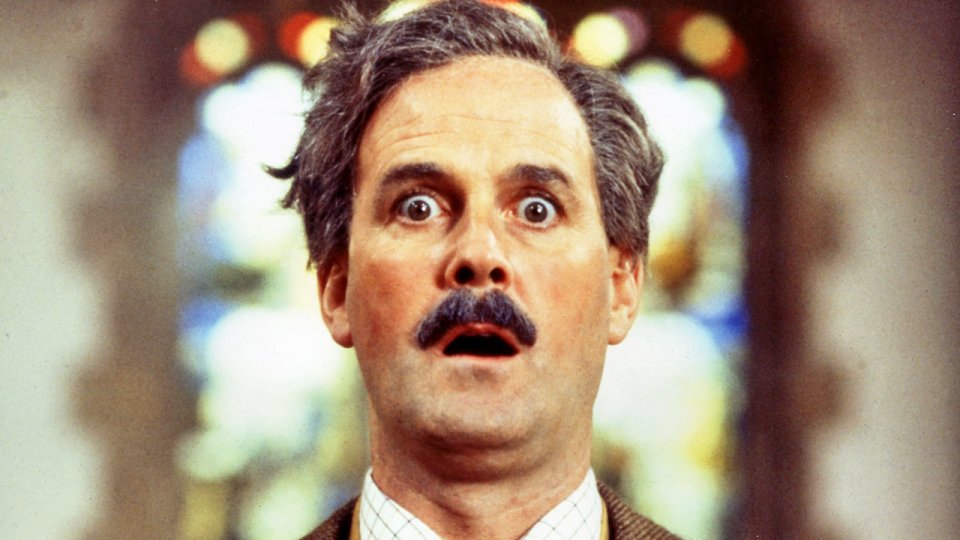
John Cleese–the legendary comedian from Monty Python, Fawlty Towers, and movies like A Fish Called Wanda–gave a lecture on creativity that will blow your mind. It’s about 36 minutes long, and it’s a must-watch for any writer.
Cleese starts by explaining the difference between “open” and “closed” modes of thinking. The open mode is playful, relaxed, and humorous, while the closed mode is critical, methodical, and sometimes stressed. The open mode is the one most responsible for creativity.
He uses the example of penicillin to explain open thinking. Alexander Fleming originally grew multiple cultures of bacteria. He found that in one petri dish, bacteria wasn’t growing. If he had been in the closed mode of thinking at the time, he would have counted this petri dish as a failure. Since he was in the open mode, Fleming realized that the lack of bacteria was actually a success, and so he focused his research on how to replicate that one dish. Penicillin was born.
So how do you get into the open mode of thinking? Cleese has five conditions that will help you:
1. Space
First, you need to seal yourself off in a quiet space where you will be undisturbed. He calls this an “oasis of quiet.”
2. Time
You should seal yourself off for a specific length of time. Giving yourself a specific time makes it easier to keep the outside world out of your space. Cleese recommends an hour and a half.
Once you’re in your oasis of quiet, your mind will probably start wandering. It may start thinking of menial tasks you need to do, like appointments you need to make or emails you need to send. You should let these thoughts happen. If you wait long enough, they’ll pass.
3. Time
Now that your mind has stopped thinking of your to-do list, you still need time to think up with the most creative solutions. You might come up with a solution to a creative problem right when you sit down, but if you play longer, you will most likely come up with a better, more original solution.
4. Confidence
Nothing kills creativity more than the fear of making a mistake. There are no wrong answers when you’re in the open mode. Wait until later to be critical.
5. Humor
Cleese says humor gets us to the open mode quicker than anything else. Humor is necessary for playfulness and creativity.
Here’s the full video:
Naming a character?
If you're anything like me, naming a character is the worst.
Stuck trying to name your new character?
What you call your creations has to feel right and can be a difficult decision. If you’re having trouble, why not try a random name generator or visit a baby names database. You don’t necessarily have to choose the names you’re randomly given but it’s a great way to get inspired. You never know when the perfect name will appear.
Subscribe to:
Comments (Atom)